
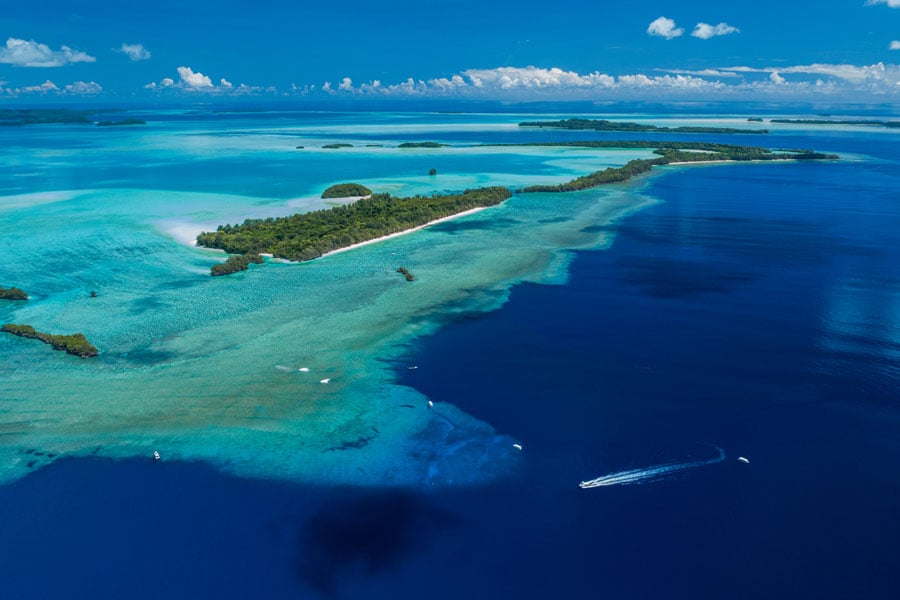
An English-speaking Caribbean nation with golden, sandy beaches? It’s easy to see why Trinidad and Tobago is an appealing place for expats to live, work or retire. Here’s everything you need to know about medical insurance and healthcare in Trinidad and Tobago.
Public healthcare in Trinidad and Tobago is decentralised into five ‘Regional Health Authorities’, which take responsibility for hospitals, clinics and general practice facilities in their respective areas. There are six major hospitals in the country: five in Trinidad and one in Tobago.1 Generally speaking, you can walk into most clinics and hospitals and be seen without having to make an appointment beforehand.2
Everyone in Trinidad and Tobago can receive a basic level of healthcare, free at the point of delivery, regardless of income or residency status. This includes emergency, inpatient and outpatient care. Beyond this, primary and specialist care is covered by contributions to the National Insurance Scheme (NIS), or out-of-pocket for those who haven’t enrolled.
There are also a small number of private healthcare facilities in Trinidad and Tobago, which can provide more dedicated and specialist care. This tends to be much more expensive than the public system, which is why it’s mainly used by wealthier locals and expats.2
The public healthcare system in Trinidad and Tobago can suffer from long waiting times, overcrowding, and long lead times for investigations and treatment. Research has also suggested that difficulties with inpatient care mean accident and emergency departments are sometimes unable to transfer patients, which means that A&E departments end up with more patients than they can handle.3
One notable area of healthcare in Trinidad and Tobago, in which non-nationals are treated differently to citizens, is in the care available for chronic diseases and cancer.
Only citizens of Trinidad and Tobago can receive cancer care and treatment free of charge. Non-nationals must pay for treatment.
Treatments and medicines for chronic diseases such as: diabetes; asthma; cardiac diseases; arthritis; glaucoma; mental depression; high blood pressure; benign prostatic hyperplasia (enlarged prostate); epilepsy; hypercholesterolemia; Parkinson’s disease; and thyroid diseases, are also not covered for non-nationals.4
For both reasons, taking advantage of private medical insurance and private facilities is a common choice for expats.2
Having health insurance in place for your time in Trinidad and Tobago is not a legal requirement, although some employers stipulate that employees have health insurance in place5. Expats and residents can access the public healthcare system in the same way through the National Insurance Scheme (NIS).
If you don’t subscribe to the NIS scheme, you either must pay for your healthcare out-of-pocket, or through private medical insurance cover. If you’re likely to need regular care or want the peace of mind that you’re covered in the event of an emergency, then the latter choice may make more sense for you.
What kind of documentation do I need to access healthcare in Trinidad and Tobago?
To join the NIS scheme, you’ll need to visit your nearest NIS office with proof of your identity and proof of residency in Trinidad and Tobago. After completing the application form, and if your application is approved, you’ll receive an NIS card that you should have with you whenever you need to use a health service.
If you’re employed in Trinidad and Tobago, then you’ll pay for your access to public healthcare through two types of social security contributions. In both cases, your employer will withhold the relevant money and send it to the authorities on your behalf.
The first is National Insurance. If you earn more than TTD 13,600 per month (approximately £1500; $2000; €1740), then the maximum contribution of TTD 414.30 per week (approx. £46; $61; €53) is applied. However, only one-third of this will come out of your paycheque, with your employer contributing the rest.
The second type is the Health Surcharge. This is TTD 8.25 per week (approx. £0.90; $1.20; €1.05), payable by all employees who earn more than TTD 470 per month (approx. £52; $69; €60).6
If you aren’t employed – perhaps you’re a retiree – then access to the basic public healthcare system is free.
Not as a legal requirement, no. However, if you want to get the best possible treatment in the quickest possible time, then having private cover in place is the most reassuring, cost-effective option.
What are the benefits of private health insurance in Trinidad and Tobago?
Having private medical insurance in place in Trinidad and Tobago means you can benefit from:
Would I need dental insurance in Trinidad and Tobago?
Yes. The provision of dental services under the public healthcare system is very limited, so it’s likely you’ll have to pay for dentistry out-of-pocket.8 This can quickly get expensive if you need regular treatments and appointments, meaning a private health insurance policy with dental care included can help you make some major savings.
The main emergency number in Trinidad and Tobago is 911, although you should dial 811 if you specifically require an ambulance. You should dial 999 if you need the police, and 990 for the fire brigade.9
Our annual healthcare policies will give you peace of mind if you’re staying in Trinidad and Tobago for 12 months or longer, including easy access to the best possible care, whatever the future may hold.
If you’re staying in Trinidad and Tobago for between three and 11 months, our short-term cover will insure you at the same level as our Foundation or Standard health insurance plans.

Our online Virtual Doctor service gives you access to advice and help on the phone or through a video call, wherever you are in the world, and even if you’re on the move.10
Access a qualified psychologist via phone or video call, for up to six talking sessions, with our Mind Health service that helps you prioritise your mental wellbeing.11

Unsure about a local diagnosis or treatment plan? Our Second Medical Opinion service can give you an independent review, so that you can make an informed decision about your next steps.12
Any up-front healthcare payments you must make can be disruptive and stressful. That’s why, if we have all the right information, we reimburse over 80% of all eligible claims within 48 hours.13

From overnight stays in hospital to private ambulance services, our comprehensive plans include emergency cover as standard, so that you can get help where it’s needed.

If you need to access more advanced or urgent care overseas, our evacuation and repatriation service can get you to the care you need and back again once you’re better.

We have expat health insurance that can suit the medical needs and circumstances of every type of employee and professional, whatever your work in Trinidad and Tobago.

Our retiree health insurance cover can take care of prescriptions, annual health checks and more, so that your costs stay manageable, whatever your future healthcare requirements.

Digital nomads from many countries can stay visa-free in Trinidad and Tobago for up to 90 days.11 Our digital nomad insurance gives you access to healthcare whenever you need it, including emergency care and hospital stays.

Our long and short-term cover is flexibly designed to meet your and your family’s health and wellbeing needs, however long your stay in Trinidad and Tobago.

Our customers’ reviews, independently moderated and managed by feefo. Based on 0 total reviews.
*Lines are open Monday to Friday, 8am-5pm (GMT).
Calls may be recorded and/or monitored for quality assurance, training and as a record of the conversation.
1 https://help.unhcr.org/trinidadandtobago/where-to-seek-help/healthcare/
3 https://pmc.ncbi.nlm.nih.gov/articles/PMC5819239/
4 https://help.unhcr.org/trinidadandtobago/faqs/accessing-healthcare-in-trinidad-and-tobago/
5 https://www.expatfocus.com/trinidad-and-tobago/guide/trinidad-and-tobago-health-insurance
6 https://taxsummaries.pwc.com/trinidad-and-tobago/individual/other-taxes
9 https://www.ttps.gov.tt/Contact/Emergency-Numbers
10 The Virtual Doctor service is provided by Teladoc Health and is part of the Virtual Care from AXA offering. Telephone appointments can be booked 24/7, 365. Callbacks are typically within 24 hours. Operating hours vary according to region. For availability in your local market and further information on the Virtual Doctor service, please click here.
11 The Mind Health service is provided by Teladoc Health and is part of the Virtual Care from AXA offering. The service provides up to six sessions with a psychologist per non-emergency mind health concern, per year. For further information about the Mind Health service, including consultation availability, please click here.
12 The Second Medical Opinion service is provided by Teladoc Health and is part of the Virtual Care from AXA offering. For further information about the Second Medical Opinion service, please click here.
13 83.2% of eligible claims submitted online between Jan 25 - Dec 25, were paid within two days.
14 https://thelandofwanderlust.com/trinidad-digital-nomad-life-culture-connec/#%E2%9C%88%EF%B8%8F-visas-entry-for-digital-n